
Kiss the Son
Psalm 2, the Transfiguration, and the God We Cannot Manage

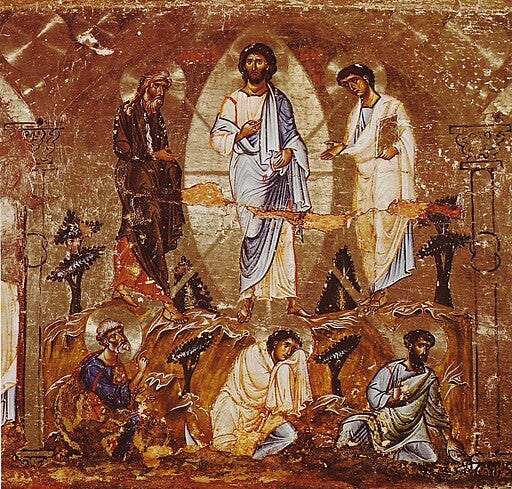
This Sunday, it was my joy to share a homily on the Transfiguration. It was on what happens when God's glory breaks through human flesh and three disciples find themselves standing inside a story far larger than they bargained for. While preparing, I found myself pulled into an alternate reading of Psalm 2 that wouldn't quite fit the sermon but refused to leave me alone. The trouble with Scripture is that it does this sort of thing. Here it is.
There is a psalm it is very easy to misread, and the misreading is so comfortable that pointing it out feels almost rude; like telling someone at a dinner party that they have been sitting in the wrong chair all evening and the person whose seat they have taken is standing quietly in the doorway, waiting.
Psalm 2 opens with a question: “Why do the nations rage and the peoples plot in vain?” Then it gives us the scene — the kings of the earth setting themselves against the Lord and his Anointed, conspiring to “burst his bonds apart” and “cast away his cords.” God laughs from heaven, installs his Son on Zion, and promises to give him the nations as his inheritance. The psalm closes with a warning: “Now therefore, O kings, be wise; be warned, O rulers of the earth. Serve the Lord with fear, and rejoice with trembling. Kiss the Son, lest he be angry, and you perish in the way.”
The easiest thing in the world is to sing this as insiders. The raging nations are out there. They are ancient Rome, modern secularism, whatever cultural force seems most threatening this particular season. We have kissed the Son. We are the ones who have already kissed the Son. We are safely on his side of the drama, and the rod of iron that “dashes them in pieces like a potter’s vessel” is our vindication. God will shatter our enemies. The psalm becomes a war song, and we sing it from the winning camp.
What if we are sitting in the wrong chair?
Look again at the rulers the psalm describes. These are rulers who God’s authority constraining. They want to burst his bonds, cast away his cords. This is the language of people who know divine power from the inside; people who have built their thrones in proximity to sacred things and have discovered that the living God is uncooperative with the version of him they have been running. The rage of Psalm 2 is not the rage of ignorance. It is the rage of familiarity.
And here Western Christianity must sit very still and listen very carefully. Because the West adopted the Son, domesticated him. It took the Anointed One and made him the guarantor of its own sovereignty — its empires, its moral certainties, its cultural identity. “Ask of me, and I will make the nations your heritage” became a promise about us, as though our civilization were the inheritance God had in mind. We claimed the Son’s authority, draped it over whatever we were already doing, and called the result Christian. We appointed ourselves his regents and then stopped listening for his voice.
Which means we are the kings the psalm tells to “be wise.” We are the rulers it tells to “be warned.” And “serve the Lord with fear, and rejoice with trembling” — the trembling is for insiders. It is for people so confident they are on God’s side that the possibility of sitting in the wrong chair has never occurred to them.
There is a scene in the Gospels that makes all of this unbearably concrete. Jesus is transfigured on a mountain — his face shining, Moses and Elijah at his side — and Peter, who has just witnessed the glory of the living God, immediately says: “Let me build three dwellings.” He wants to house the revelation, make it permanent, keep it where he can find it again. Peter is the patron saint of every movement that encounters the real God and immediately starts a construction project — physical, political, theological, cultural. The booth can be a cathedral or a rally or a curated private spirituality. The shape is irrelevant. The booth is always the place where you stop following because you have decided you have heard enough.
The voice from the cloud interrupts Peter mid-sentence: “This is my beloved Son. Listen to him.” And what Jesus says, on the way down the mountain, is that the Son of Man must suffer at their hands.
Sure, “their” hands include Rome, the imperial machine that will drive the nails. But more, “their” hands include the chief priests and Sadducees, who will orchestrate the arrest to protect the temple economy. “Their” hands include the Pharisees, who will find Jesus intolerable because he will not submit to their reading of the Law. “Their” hands include the scribes, who know the scriptures thoroughly and will use that knowledge to build a legal case against the one the scriptures describe. Every faction, jockeying for position, competing with each other on every other question, will converge on this single project: the elimination of the God who will not be managed.
And “their” hands include the crowds. The same crowds who would have crowned Jesus king on their terms, in their timing, for their purposes. The palms and the hosannas and the shouts of “Son of David” are one more booth. The crowd’s Jesus is a deliverer who will do what they already wanted done. And when he turns out to be something else, when the Son goes where no one was asking him to go, the hosannas become “crucify him” within the week.
Every hand in Jerusalem is a hand that wanted Jesus. Rome wanted order. The priests wanted stability. The Pharisees wanted righteousness. The crowds wanted liberation. And every one of them was willing to destroy the living God the moment he became inconvenient to the version of God they had already approved. This is us. This is every age of the church that has claimed Christ’s name for its own project and then found the actual living Christ to be an unbearable inconvenience to the Christ it had in mind.
The Son of Man suffers at our hands. He has always suffered at our hands. And we are most dangerous when we are most sincere.
And yet.
After the voice, after the glory, after Peter’s plans are scattered and the disciples are face down on the ground in terror, Jesus comes to them. Touches them. Says, “Rise, and have no fear.” He reaches down to the booth-builders, the managers, the ones who heard the voice of God and started drawing up blueprints. He reaches toward the very hands that will, in a matter of weeks, abandon him entirely.
The Son who will not be contained also will not leave.
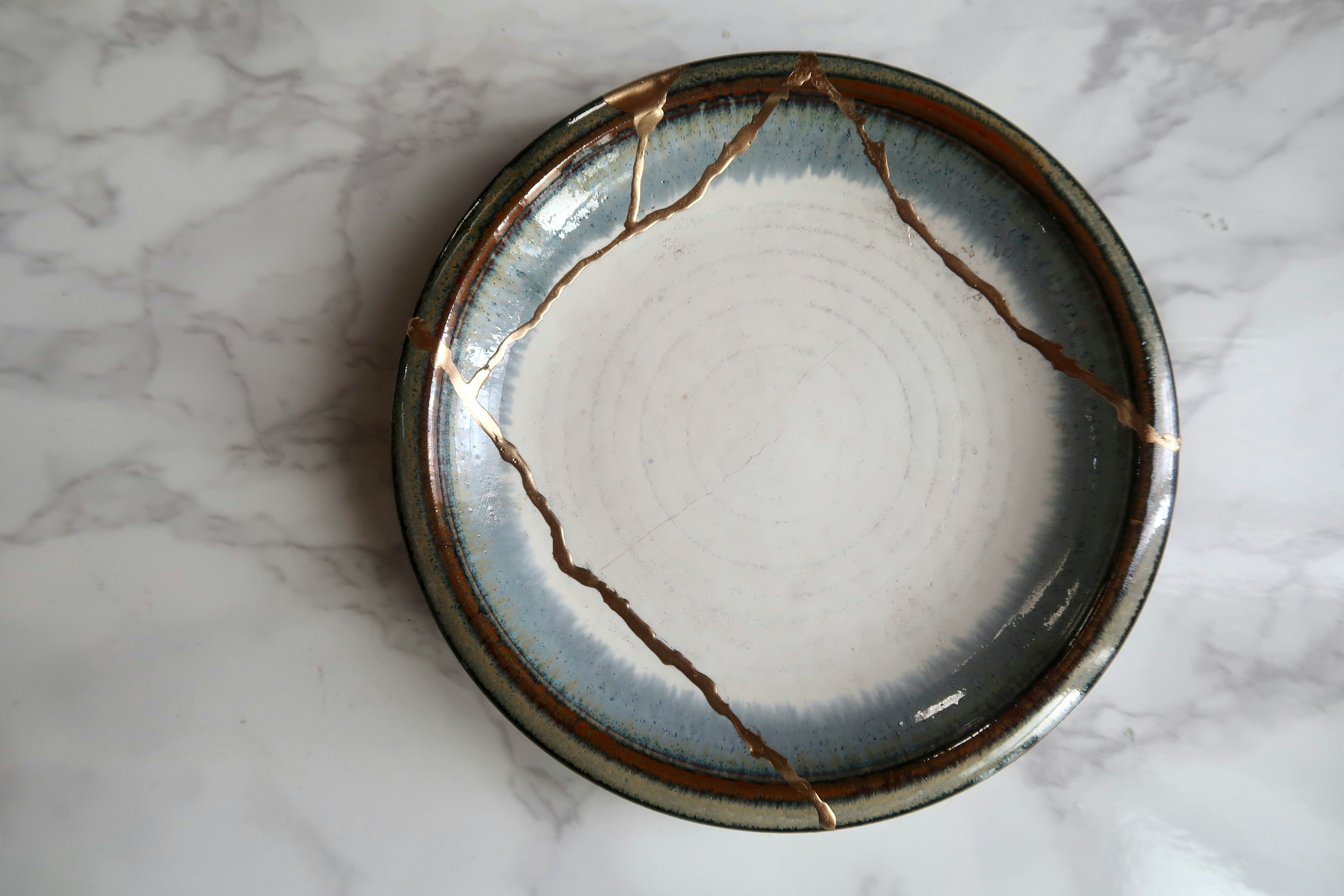
And here Psalm 2 turns inside out. “You shall break them with a rod of iron and dash them in pieces like a potter’s vessel.” We hear that line and flinch, because we know now that the vessel is ours. But consider what the vessel was doing. It was holding God in place. It was keeping the Anointed One where we put him and inside our projects, our politics, and civilizational confidence. The vessel is the container we built for a God we wanted to control, and as long as the vessel held, we were its prisoners. A God you can manage is a God who has become your mirror. You bow down and worship yourself in sacred vestments.
The rod of iron breaks that. It breaks us free. The shattering of the vessel is the shattering of our need to dominate the Son, and on the other side of that destruction is something we could never have built for ourselves: the terrifying, liberating possibility of a God who is actually alive. A God who moves. A God who goes somewhere. A God whose next word to you might be one you have never heard before.
That is the gospel buried in Psalm 2’s last line: “Blessed are all who take refuge in him.” The refuge is him. Jesus, the living one, already heading toward Jerusalem, already walking somewhere you did not plan to go. The booths are gone. The vessel is in pieces. And there he is, standing in the rubble, saying follow me.